School of Public Pedagogies — Contexts, Collectives and Action
Wednesdays, 10.00am-12.00pm (AEST) October 14 – November 18, 2026
The Public Pedagogies Institute is inviting submissions to present at our 2026 online seminar series: Contexts, Collectives and Action.
The theme for the series is Collectives, both in practice and through representation. What do collective formations offer the public as a way of organising? What are the elements that make up a collective? What are the challenges in actualising collectives and what are the hopes generated through imaginings?
If you are interested in hosting a session as a part of the School of Public Pedagogies, the seminars will take place online once per week on Wednesdays – beginning Wednesday, October 14 through to Wednesday, November 18. Each session will be two hours with two people taking carriage of an hour each. The time is 10.00am-12.00pm (AEST).
Contributors will also be invited to submit an abstract for a forthcoming issue of the Journal of Public Pedagogies.
We recently invited members of the Public Pedagogies Institute to submit some notes on collectives to stimulate ideas for the upcoming seminar series, which we have provided below.
The term ‘collective’ as an organising principle has a long history. Associated with political groups and informed by ideas of egalitarianism, collectives offer another way of undertaking ‘work’ that is informed by egalitarian principles and enacted in ways that are non-hierarchical. By their nature to be egalitarian and non-hierarchical they must interrogate their own composition to address power dynamics and to establish the terms through which they will work. Democratic imperatives in education (Freire 1971, Dewey 1990) are closely aligned with collectivist modes in that there is an aim on behalf of the educator to bring students together to be active participants in both the school and ultimately in the broader society. They also provide fertile ground for questioning, advocacy and reassessing shared values in perpetuity.
Collective plurality is also a condition for political and philosophical realisations (Arendt 1952). Feminist collectives have formed at different times in history in an ongoing challenge or dismantling of patriarchy to address the needs of women. Worker’s collectives have initiated structures whereby profits are shared that challenge the quintessential concept of self-interest in capitalism. Collectives constitute ways of imagining that move us beyond what we now term as neo-liberalism. Larger ways of organising societies have been illustrated through configurations of collectives whether this be in practice or through representation in film, fiction or theatre such as French film makers of the 1930’s, Socialist Realist writers of the same era alongside the ‘New Theatre’ in Australia. More contemporary iterations are collective arts groups who work to realise projects in public settings as well as collectives that meet together to generate social change.
Some community and participant-led research also values the collective over either the individual or hierarchical structure, bringing the questioning of the political act of the distribution of power into the creative and empowering process. This is often done with the realisation that empowerment is not a gift that can be given by others but is act against oppression and is best facilitated by fostering and seeking out collectives, with shared values and experiences.
The idea of collective, collective action, and collectivity when looked from the perspective of a rebellion against the dominant hegemonic system very often tend to overlook the idea of the hegemonic as also the collectives of the individuals (who represent the same idea). The status quo or the shared, consensus values that inform our everyday lives are themselves governed by a kind of silent collective, There is a need for exploration of the meanings of what the term collective may entail. The idea of the collective and the ones which are rebelled against are not fragmented and are a result and part of the process of the same system. Each individual in a group/collective is a representative of complexities of ideas and a result of the processes exposed to different ideas and situations.
The idea of the circles is the representation of different groups of people working on different ideas as collectives they are also the representations of the different populations having different interests. As a result, each group is a set of different ideas and individuals with different interests and intentions. Hence a collective as not a homogenous group rather a mix of complexities of ideas, interests, connections, situations, geographies, demography, ideologies, and temporality.
Therefore, there is a need to explore the idea of collective from different perspective of being;
1) Positive vs negative: how one defines positive and negative is also as situated in the positionality of the individual, the temporal situation and the larger idea of society in relation of what is excepted, not excepted, ideas of equality, justice, equity and access);
2) Existence of hierarchies: the collective actions as lead by people, individuals, or groups. The constitution of groups as also hegemonic powers and people, and may have hierarchies within a group;
3) Intentional and organic: how different groups are formed: just as a result of being situated in a space or as a result of intentionally working for a cause and taking actions (irrespective of whether people like or dislike, agree with each other on some idea and situation), the idea of people working together as a result of the intentionality of the state or institutions;
4) Ephemeral: the groups may come together and dissolve over time with different reasons;
5) Process (constant change, evolution and connected progression, and circling back to the same idea and not necessarily always in a linear form at times in an entangled and nonlinear form): the ideas of the different groups may evolve, dissolve, and change with time and as result the formation of collectives also lead to further bifurcations, change in groups, and formation of different groups.
There is also the shadow side of “collectivity”. We should bear in mind that as other concepts/terms in social organisation have been abused (such as republic), Collective has been hi-jacked at different times throughout history for different political purposes. This shadow side of collectives also occurs in contemporary times where social movements can be orchestrated or used for destructive purposes. So, values are fundamental to understanding collectivity and collective work in community development. The work cannot be separated from the values. That’s why process is important and why reflection is important. The phenomenon of group think, group bullying, group shaming, group scapegoating are interesting experiences of the dark side of collectivity.
The common environmentalist cliche “Think globally, act locally” also evokes collectives and signals the importance of collective action at local levels. So, there is the possibility of the relevance of collectives to social and other circumstances on the ground.
Lastly collective memory—instances of history that have been memorialised or in more recent times contested. The dismantling of monuments; social history museums and the work of Monument Lab https://monumentlab.com all attest to a reconsideration of collective memorialisation. The most recent special issue of the Journal of Public Pedagogies (no 8 2026) is focussed on the public pedagogical formations of history. One of the prompts for this issue was what pedagogical responsibilities do we as communities have to bring a public into a relationship with the past and what might the public contours of this relationship look like?
Exploring the potential of street art to counter misrepresentations and invisibility of Indigenous women and girls in Canadian mass media Dr Anna Rodrigues
Walking and talking with/in place: Socially engaged public art practices in Aoteara Mikayla Journee
Seminar Week 2 Friday, March 14
An exploratory analysis of Malaysia’s hidden history in the Public Sphere Michelle Low-Shamir, Adam Mathews, Kevin Myers
African Diaspora: Preservation of Culture and Memories, and Identity Projects in Australia Charles Mphande,Magang Reech, Konker Malual
Seminar Week 3 Friday, March 21
Remembering the absent ones, remaking publicness Timothy Martin
The Desirous Public: Public Pedagogy and the Gravity of History Jake Burdick, Mahreen Mamoon, Ralph McCoy
Seminar Week 4 Friday, March 28
The Needle in The Ego Era: A History Scott Welsh
Public pedagogies and the memory of the recent past: Experiences with theatre in Michoacán-Mexico
Yuri Páez, Inés Dussel
Seminar Week 5 Friday, April 4
Pragmatically prisming public pedagogies: how conscious reflæXion can lead to eco-psycho-social justice and enhanced wellbeing (workshop)
The Public Pedagogies Institute invites proposals for a forthcoming seminar series on the PublicPedagogical Formations of Histories.
The field of public pedagogy is still relatively new and emerging but has much to offer in how education is enacted. As a discipline public pedagogy looks to instances of learning and teaching outside of formal educational institutions. This includes but is not limited to spaces recognised as sites of informal learning. However, this does not indicate a binary, but rather porous moments where the contours of history are mitigated by public memorialisation, vigils, or other forms of representations. What are the pedagogical affordances and limitations of these respective representations of histories? Public pedagogy recognises the speaking subject in the instances of those who occupy the public realm and contribute to a public understanding of histories.
This seminar series draws on the field of public pedagogy and the educational affordances in the consideration of public memory and public history. It brings together presentations that examine both the relationship between sites of informal learning and the past, and that examine the histories of learning and teaching outside of formal education institutions.
How might history be informed by a public pedagogical framing?
What are the histories of learning and teaching outside of formal education institutions?
How might approaches to public pedagogies benefit from engagement with the history ofeducation?
How is the past remembered and in what ways is the past carried forward in the public realm?
What pedagogical responsibilities do we as communities have to bring a public into a relationship with the past and what might the public contours of this engagement look like?
This seminar series will be held via zoom and will run on a Friday Australian Eastern Standard time 10.00am—12.00pm beginning the 7th of March and concluding on the 4th of April 2025. If you would like to present as a part of this seminar series, please send a proposal no later than January 31, 2025, to Karen.Charman@vu.edu.au.
Seminar presenters will be invited to submit their paper to be published in a forthcoming edition of the Journal of Public Pedagogies.
Recommended reading in the field of public pedagogy:
Biesta, G 2012, ‘Becoming Public: Public Pedagogy, Citizenship and the Public Sphere.’ Social andCultural Geography, vol 13, no 7, pp. 683-697.
Burdick, J, Sandlin, J and O’Malley 2014, Problematizing Public Pedagogy, Routledge.
Charman, K and Dixon, M 2024, Theorising Public Pedagogy: The Educative Agent in the Public Realm. Routledge.
Charman, K and Dixon, M 2022, Theory and Methods for Public Pedagogy Research, Routledge.
Charman, K, Dixon, M, Bellingham, R Thomas, M and Cooper, J 2017, ‘Educational Consciousness: Breaking Open the Category of Knowledge in Footscray’, Journal of Public Pedagogies, vol 2, pp. 54-63.
Sandlin, JA, Schultz, B and Burdick, J 2010 The Handbook of Public Pedagogy: Education and Learning Beyond Schooling. Routledge.
This project is based around drawing together older, longer term residents with younger, newer residents in a local area they share.
Prior to the COVID pandemic, Gallery Sunshine Everywhere acquired funding from Brimbank Council and implemented the project in Sunshine, a suburb in Melbourne’s west. A report is available in the Projects section of www.gallerysunshine.com.
In 2019, Gallery Sunshine Everywhere joined with the Public Pedagogies Institute in a successful grant application to Moonee Valley Council to run a similar program in Flemington.
With the various lockdowns in Melbourne, demolition of the Flemington Community Hub, the proposed location for the project, relocation of the Hub’s activities to other community settings, continuing preferences for online rather than in person activities along with staffing changes and considerable changes to the original plan, the Intergenerational Maps Project faced several false starts. Finally, in late 2022, it was decided to embed the project in the afterschool program conducted at Debney Meadows Primary School by the Edmund Rice Foundation.
Finally, we conducted three sessions with large numbers of children each afternoon, along with the Edmund Rice Foundation mentors who work each week with the children.
Dr Iffat Khatoon welcomed the children to each session and gave them an overview of the project.
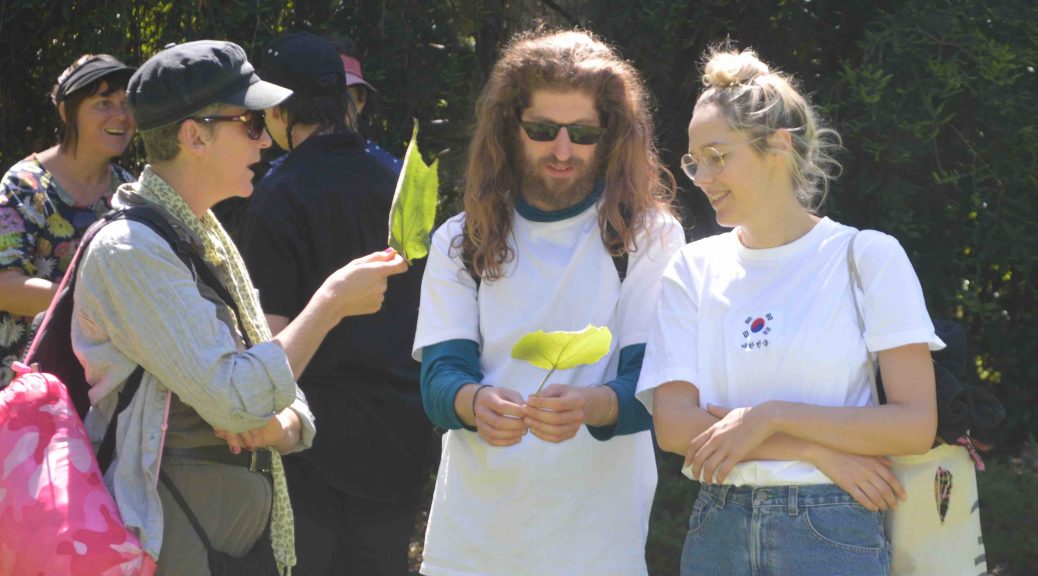
On Tuesday afternoon, local historian, Sheila Byatt led a wonderful session, capturing the attention of the Grade 3-4 children with the horseshoes and eucalyptus leaves she brought with her and lots of stories about local birds and more. Visiting artist Rhiannon Thomas then took over with a lively artwork session with students drawing their favourite local buildings.
On Wednesday afternoon, former Flemington PS principal, Rotary member and local identity, Lesley McCarthy spoke with the Grade 5-6 children, outside in the sunshine (competing with the loud building noise adjacent to the school). Together they looked at photographs of buildings and important past local events Lesley showed and which were displayed along the school walls. These told stories of old buildings, early images of familiar roads and more. Subsequently, Rhiannon Thomas led the students in an art session and they produced work to be added to the work from the other two days to form a collage documenting the Intergenerational Maps Project.
On Thursday afternoon, I shared stories from “The Stopover that stayed” by Grant Aldous with the young children, had them guess what the handmade nails I showed them were, talked about Ballarat’s Sovereign Hill and how those who had visited had travelled there. We compared their travel experience with that of the gold diggers, looked at replica shakedowns from those days created by artist Dr Flossie Peitsch in acknowledgement of the shelter sheds Caroline Chisholm built especially for women and children making their way to the goldfields. After I showed the group a photo of my favourite local building, Flemington Post Office, the children shared theirs and with Rhiannon’s guidance produced their contributions to the collage.
Maureen Ryan Director, Gallery Sunshine Everywhere
Some folk might be interested in submitting an abstract for a special edition of Qualitative Research Journal focusing on public pedagogy research. The issue will be guest edited by Karen Charman and Mary Dixon of the Public Pedagogies Institute. Please use the link below.
As part of the Public Pedagogies Institute 2022 conference Sometimes Connect, we are excited to announce an hour with Aseel Tayah, creator of Bukjeh.
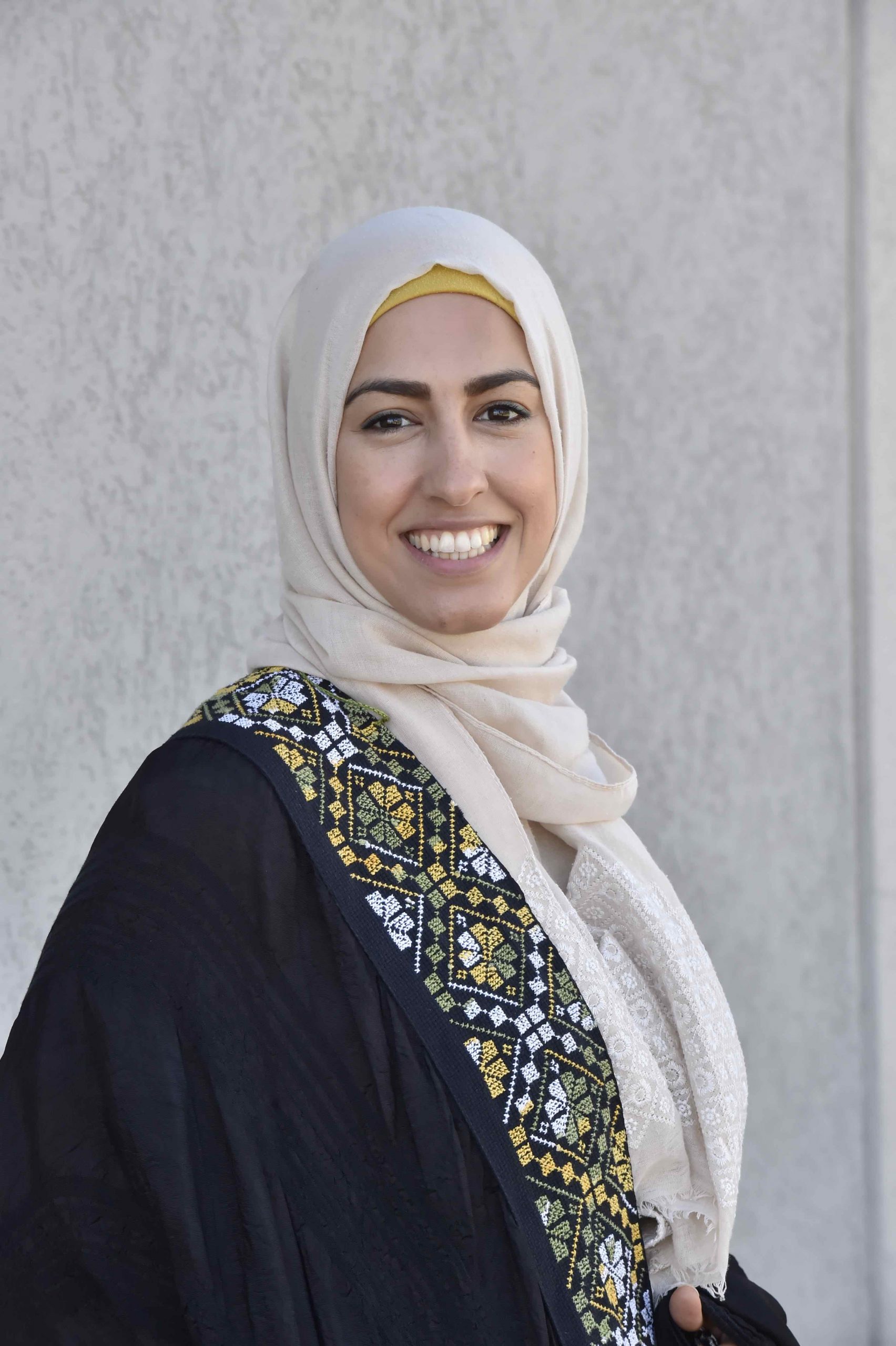
Aseel Tayah is a Melbourne-based Palestinian artist, creative director, and cultural leader who uses her practice to advocate for artists of colour, mothers, children, and young people, changing the world, one project at a time. She has recently been described as “an unstoppable force in the Australian cultural landscape.”
Through the power of storytelling, Aseel’s artistic practice creates awareness and facilitates connection by humanising the experiences of people who have been displaced. As such, her work is embedded in the community and is often highly responsive to current issues.
During Refugee Week 2020, Aseel curated produced, and presented a series of live online discussion panels featuring national and international artists and cultural leaders. The series attracted more than 40,000 views and led to an invitation to participate in the inaugural TEDx Melbourne PluggedIn event where she was awarded Best Speaker.
As a creative director and installation artist, Aseel has a wide range of experience; international highlights include We Too Want To Play, the establishment of Palestine’s first network of toy libraries and Fingerprint of an Arab Girl, an annual event showcasing the talents and achievements of girls living under occupation.
In Australia, collaborations include unique intercultural experiences such as Lullabies under the Stars, an Arabic/First Nations work for children, and the participatory installation Bukjeh, exploring stories of home and being forced to leave it.
Aseel exemplifies the use of art and creativity to achieve social justice and is renowned for her kindness, optimism, and generosity. She also has an incredible singing voice which she uses to connect hearts and harvest hope.
This event will be a feature of Day Two of the conference.
Public Pedagogies Institute Conference November 24 -25, 2022, Footscray, Melbourne
Registrations are now open for the Public Pedagogies Institute 2022 conference – Sometimes Connect.
ABOUT
The annual conference of the Public Pedagogies Institute. The theme of this year’s conference is Sometimes Connect which seeks to explore what constitutes connection, how can alliances be built, what are the affordances for social change and what are moments of discord? The conference will include presentations, panel discussions and workshops, with a range of opportunities for participation.
The conference will take place over two days and attendees are welcome to attend on one or both days. The conference is free for current students and there is a reduced fee for low income earners.
DATE
Thursday 24 November – Friday 25 November 2022
LOCATION
Victoria University Polytechnic, Footscray Nicholson Campus 238A Nicholson Street, Footscray
Keynote Speaker
Marnie Badham, artist-researcher
With a 25-year history of art and justice practice in both Canada and Australia, Marnie’s research sits at the intersection of socially engaged art practice, participatory methodologies, and the politics of cultural measurement. Through aesthetic and dialogic forms of encounter and exchange, Marnie’s collaborative social practices bring together disparate groups of people (artists, communities, industry, local government) in dialogue to examine and affect local issues.
Her recent collaborations include a participatory public performance following extreme weather events in the Dandenong Ranges; public art commissioning development on Wurundjeri and Bunurong Country with Vicki Couzens; expanded curation projects on food-art-politics; and a series of creative cartographies registering emotion in public space in the Yarra Ranges (AUS), Kamloops (CAN), and Cape Breton Island (CAN). Her book The Social Life of Artist Residencies: connecting with people and place not your own is soon to be released.
Marnie is a Chief Investigator on the Australian Research Council Linkage Project Ambitious and Fair: towards a sustainable visual arts sector and contributes to industry standards on public art commissioning, artist residencies, and arts funding. She is Senior Lecturer at the School of Art, RMIT University. www.marrniebadham.com
This is the first in a series of podcasts presented by the public pedagogies Institute.
Ped Talks aim to contribute to the growing field of public pedagogy and interview artists, community educators and academics who identify with learning and teaching outside of formal institutions.
Our first interview is with Deb Bain King an artist who works in the west of Melbourne.
The Public Pedagogies Institute is excited to announce Dr Marnie Badham as one of our keynote speakers for our 2022 conference Sometimes Connect.
Marnie Badham, artist-researcher
With a 25-year history of art and justice practice in both Canada and Australia, Marnie’s research sits at the intersection of socially engaged art practice, participatory methodologies, and the politics of cultural measurement. Through aesthetic and dialogic forms of encounter and exchange, Marnie’s collaborative social practices bring together disparate groups of people (artists, communities, industry, local government) in dialogue to examine and affect local issues.
Her recent collaborations include a participatory public performance following extreme weather events in the Dandenong Ranges; public art commissioning development on Wurundjeri and Bunurong Country with Vicki Couzens; expanded curation projects on food-art-politics; and a series of creative cartographies registering emotion in public space in the Yarra Ranges (AUS), Kamloops (CAN), and Cape Breton Island (CAN). Her book The Social Life of Artist Residencies: connecting with people and place not your own is soon to be released.
Marnie is a Chief Investigator on the Australian Research Council Linkage Project Ambitious and Fair: towards a sustainable visual arts sector and contributes to industry standards on public art commissioning, artist residencies, and arts funding. She is Senior Lecturer at the School of Art, RMIT University. www.marrniebadham.com